THE QUICK ANSWER
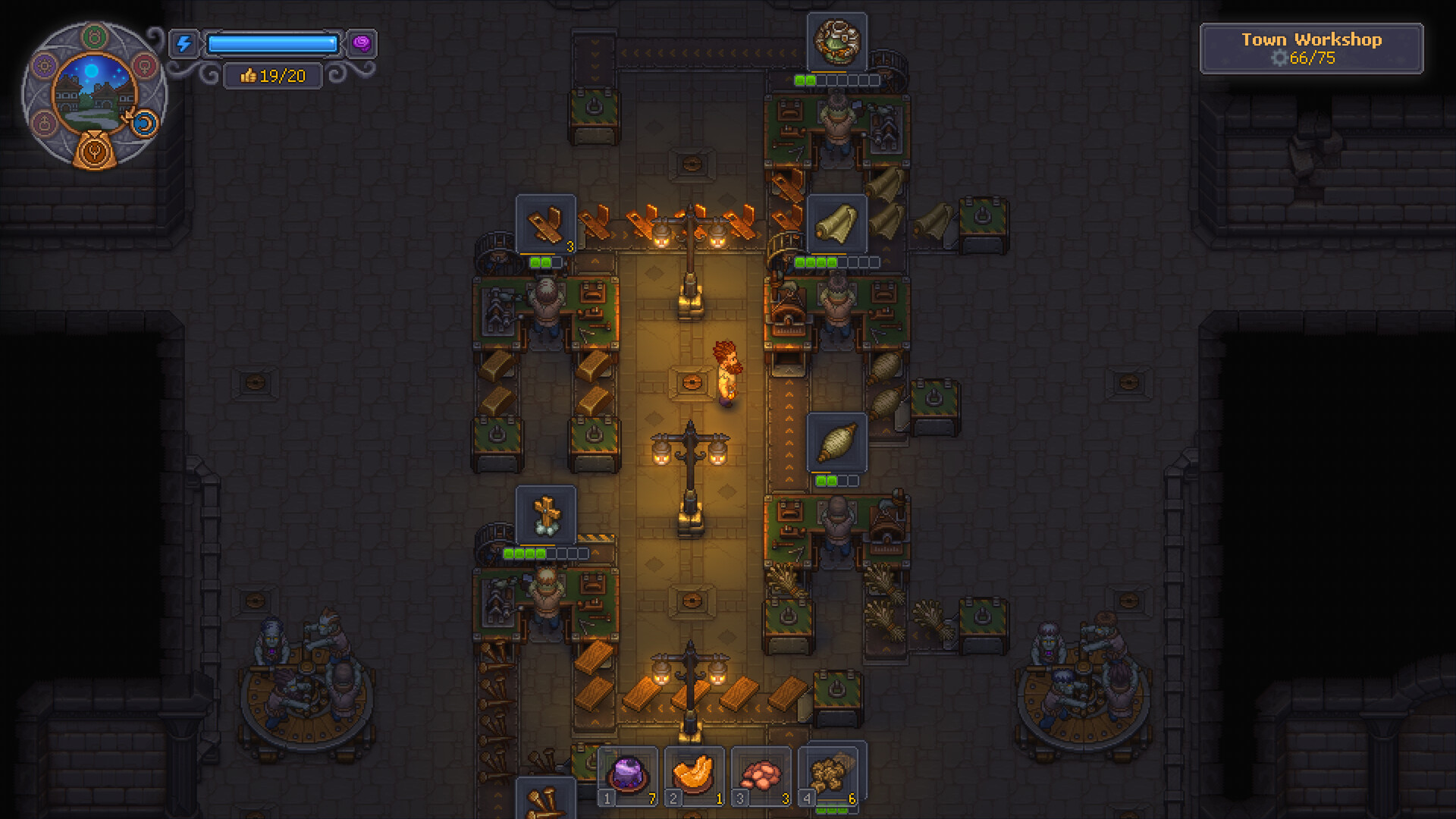
Build around one destination: the item your next project actually needs. The player factory discussion describes powered belts, staffed production and porter handoffs, but those components only become a useful line when a finished item reaches its pickup point. Prove that journey with a small queue before extending the factory.
What you need
- Factory access and the technologies for your chosen line.
- Enough input stock for one small test batch.
- Workers for production, power and any required handoff.
Build the line
- 01Input buffer
- 02Powered connection
- 03Queued workbench
- 04Output / porter
Choose a single output
Write down what you want at the end of the line: a building material or an order supply. Suggested starting rule: pick something needed now, with inputs already available, rather than a long chain that depends on another locked technology.
Create a visible input buffer
Put a small known batch in a conveyor chest or the relevant storage. Trace the intended route before extending belts across the room. Players recommend short runs and chests as buffers; look for a clear connection into the selected machine.
Staff and queue the work
Check the power display, put a worker on the station, and select its recipe. A recipe shown in the menu is not the same as a queued task. Compare the input counters with the actual items arriving at the station.
Observe one complete cycle
Watch one input leave its buffer and one finished output reach its destination. Player setups distinguish the factory supply porter from the final warehouse porter. Verify both handoffs before committing to a weekly order.
Choose the bottleneck before buying more space
A line has two practical budgets: ingredients and assigned jobs. Before expanding, write the required inputs beside the production station, then identify who supplies power and who moves the output. Our recommendation is to spend construction materials on the missing link you can observe. If ingredients accumulate at the workbench, adding upstream storage will not answer why crafting waits. If finished supplies accumulate at pickup, inspect the collection route. Once the full journey works, increase the queue and compare its drain on the input buffer with replenishment. Expand the part that falls behind, rather than extending every belt at once.
Common blockers
| What you see | Check | Next action |
|---|---|---|
| Nothing leaves storage | Chosen item, stock and output connection | Test the chest with one permitted ingredient. |
| Inputs arrive but crafting stops | Recipe queue, worker and ingredient counters | Inspect the workbench before adding more belts. |
| Finished supplies stay in the factory | Collection stations and assigned porters | Trace the output handoff separately from production. |
Workbench questions
Should I automate everything immediately?
The suggested approach is one useful line, then expansion. A large unfinished factory does not help a current order.
Is this diagram a placement blueprint?
No. It shows the production checkpoints; match ports and buildings to the layout in your save.
Keep the work moving
Official game references
- Graveyard Keeper 2 — official developer announcements ↗Official patch notes and developer updates
- Graveyard Keeper 2 — official game overview ↗Official game page
Version & evidence
Reviewed against PC 1.008 patch contextThe working pattern comes from launch-period player setups. The diagram is a logical checklist, not a tile-accurate blueprint. Recipe costs and gear output must be read from your installed build.
Source-reviewed guide; player routes are identified below. Not an in-game test.